Drawing · Moving Image · Archive · Site
BAPI: What Remains Before Disappearing
2020–ongoing
Bagbazar, Kolkata
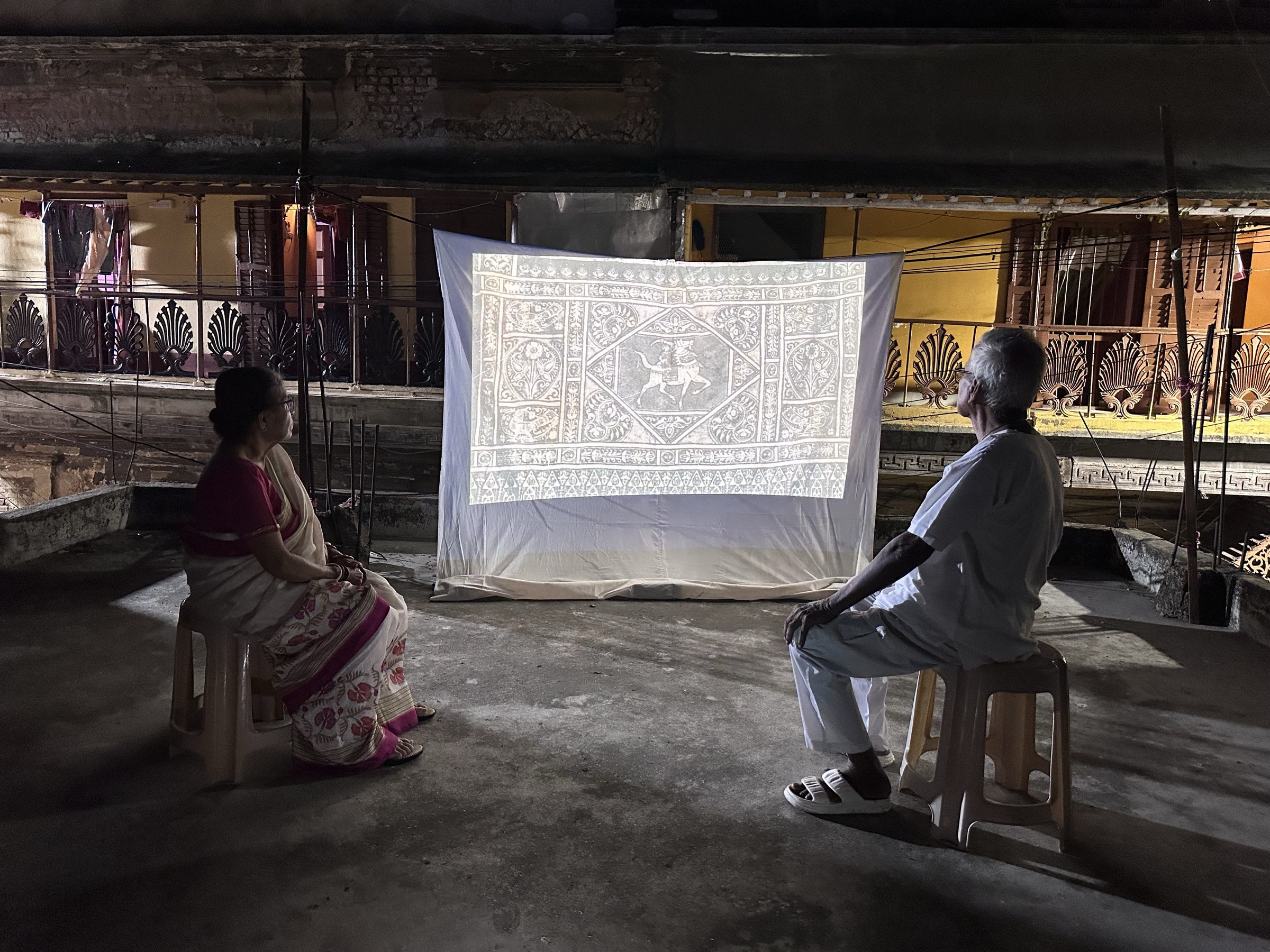
What do we inherit when what survives can no longer explain itself?
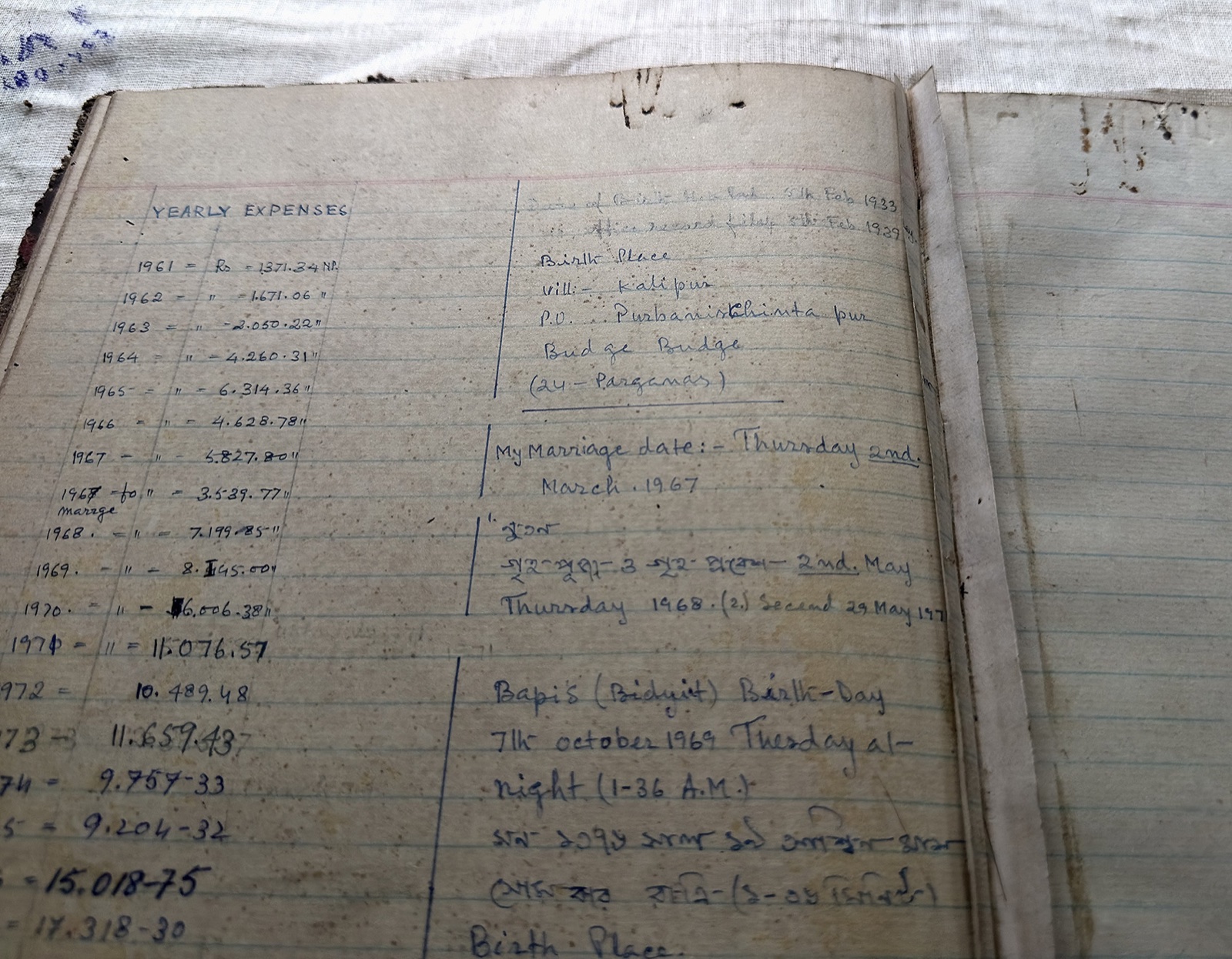
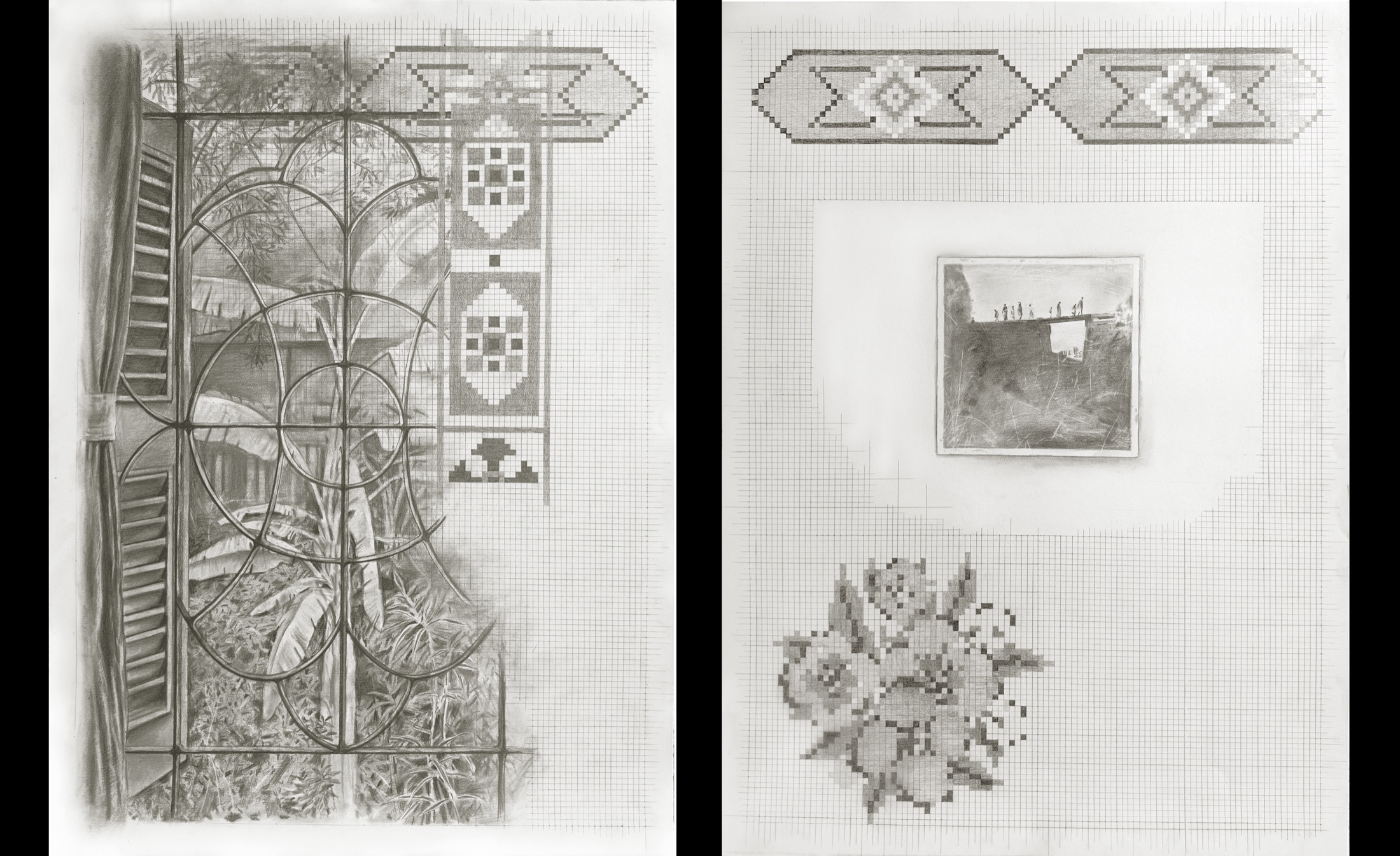
Every archive carries not only what was kept, but the absences through which it survived.
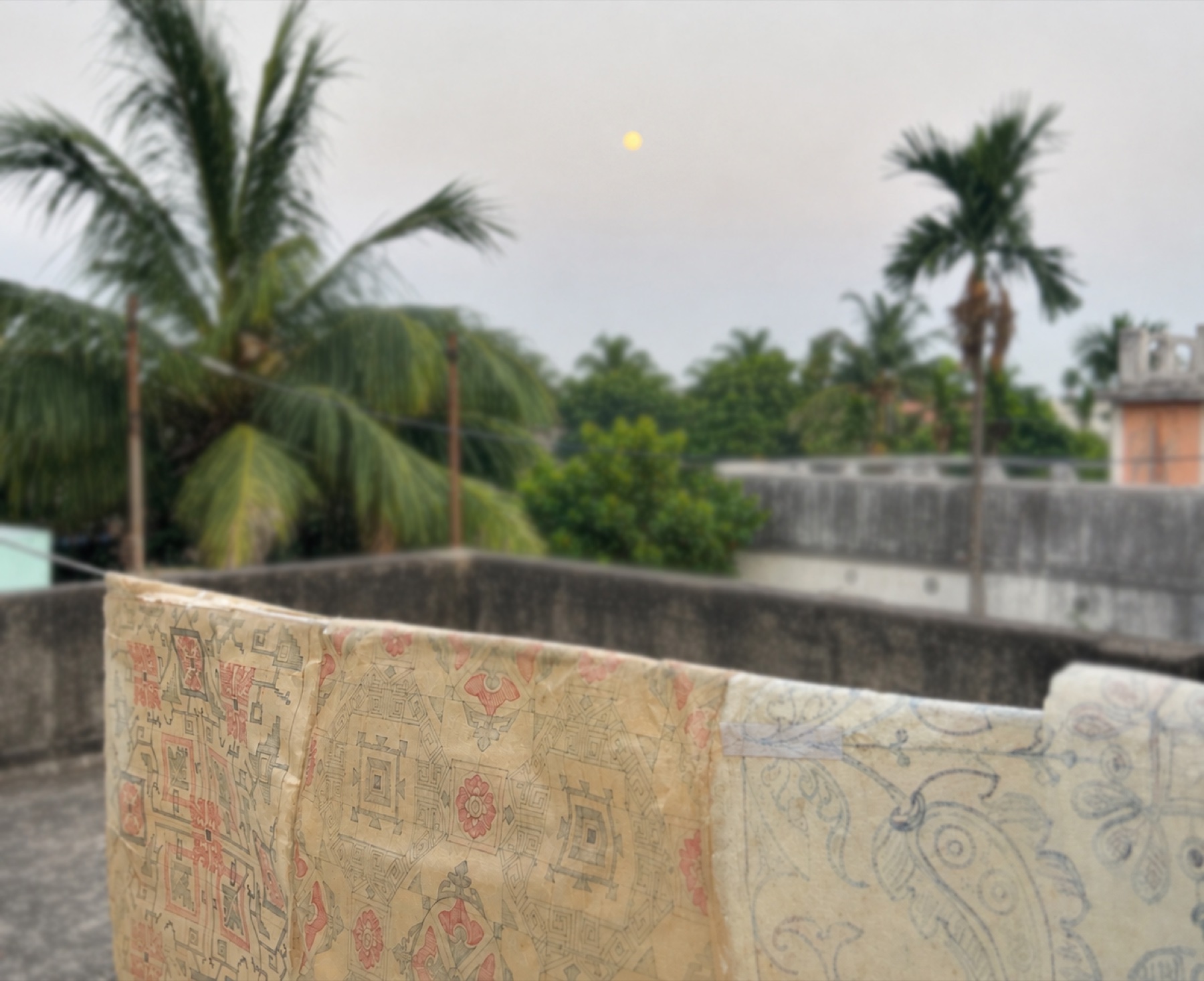
Perhaps preservation begins where recovery becomes impossible.
Site-responsive project
Drawing, archive, photography, performative gesture, moving image, projection and domestic architecture
BAPI: What Remains Before Disappearing, includes the Foundation Project titled BAPI: An Archaeology of Design Memory. This Foundation Project is implemented by India Foundation for the Arts (IFA), under the Arts Practice – Explorations Programme, 2026.
What happens when an archive outlives the memory that could still speak for it?
BAPI: What Remains Before Disappearing begins with a paradox: an archive remains while the living memory that once accompanied it is receding.
I return to tracing papers, hand-drawn linoleum designs, batik and textile patterns, salary ledgers, photographs and fragments from the working life of my father, Hrishikesh Paul. His linoleum and batik practice developed within the design culture of post-Independence Bengal and extended across more than five decades.
Yet what is disappearing is not memory alone.
The industrial world within which these designs were produced has also receded. The factory has closed. Linoleum, once present across domestic interiors, has largely vanished from the spaces it inhabited. Design preferences have shifted. Forms that were once ordinary, visible and lived with have slipped almost unnoticed out of contemporary visual memory.
The archive therefore survives several disappearances at once: a maker's memory, a material culture, an industrial history and a changing idea of the modern interior.
I do not approach these materials in order to reconstruct a biography or recover an intact past.
I enter them through my own practice.
Design grids migrate into graphite drawings. Photographs are interrupted, displaced and erased. Tracing papers become translucent membranes. Ledgers register labour and time. Moving images hold gestures, pauses and repetitions. Cloth, drawing and projection allow inherited forms to appear, recede and return in altered states.
What interests me is the body-based intelligence embedded within these materials: knowledge carried through hand, eye, touch, rhythm, measurement, repetition and labour. It belongs to a form of design practice in which thinking and making were inseparable — where a pattern passed repeatedly through the body before entering the surfaces of everyday life.
Linoleum, batik and surface design are therefore not simply objects or techniques within the archive. They reveal how design moved from drawing tables into floors, fabrics and domestic spaces, becoming part of the patterned skin of everyday modernity. These surfaces were meant to be lived with rather than preserved. Their very familiarity made the labour behind them easy to overlook.
As both personal memory and material context withdraw, the surviving archive becomes unstable evidence. It can no longer fully explain the circumstances of its own making. Meanings loosen. Fragments detach themselves from biography. What once belonged to function and everyday use begins to enter another temporality.
The project unfolds within our old family house in Baghbazar, North Kolkata. The house is not simply an exhibition site. Its rooms, walls, thresholds, surfaces and accumulated time enter the work, becoming archive, witness and collaborator. Projection falls across ageing architecture; drawings encounter domestic surfaces; inherited materials return to a space already marked by use, alteration, absence and memory.
Here, the domestic archive opens onto a wider history.
BAPI considers the less visible design labour behind linoleum and batik in post-Independence Bengal, and the patterned environments these forms helped produce. It asks what happens to visual culture when the objects that carried it disappear, the industries that produced them close, preferences change, and the individual histories behind their making fall outside formal cultural narratives.
The personal and the historical therefore remain inseparable. A father's receding memory encounters the disappearance of the material world in which his work once circulated.
At its centre lies a larger question:
What happens when an archive survives not only the memory that could explain it, but also the industry, material culture and everyday world that once gave it meaning?
BAPI does not attempt to rescue an untouched past.
Preservation here is not neutral.
To preserve is already to select, translate, displace and transform. The archive becomes less a repository of what was than a site of transmission — between father and daughter, memory and forgetting, labour and image, domestic inheritance and public history.
What survives does not return unchanged. It passes through another hand, another body, another time.