About
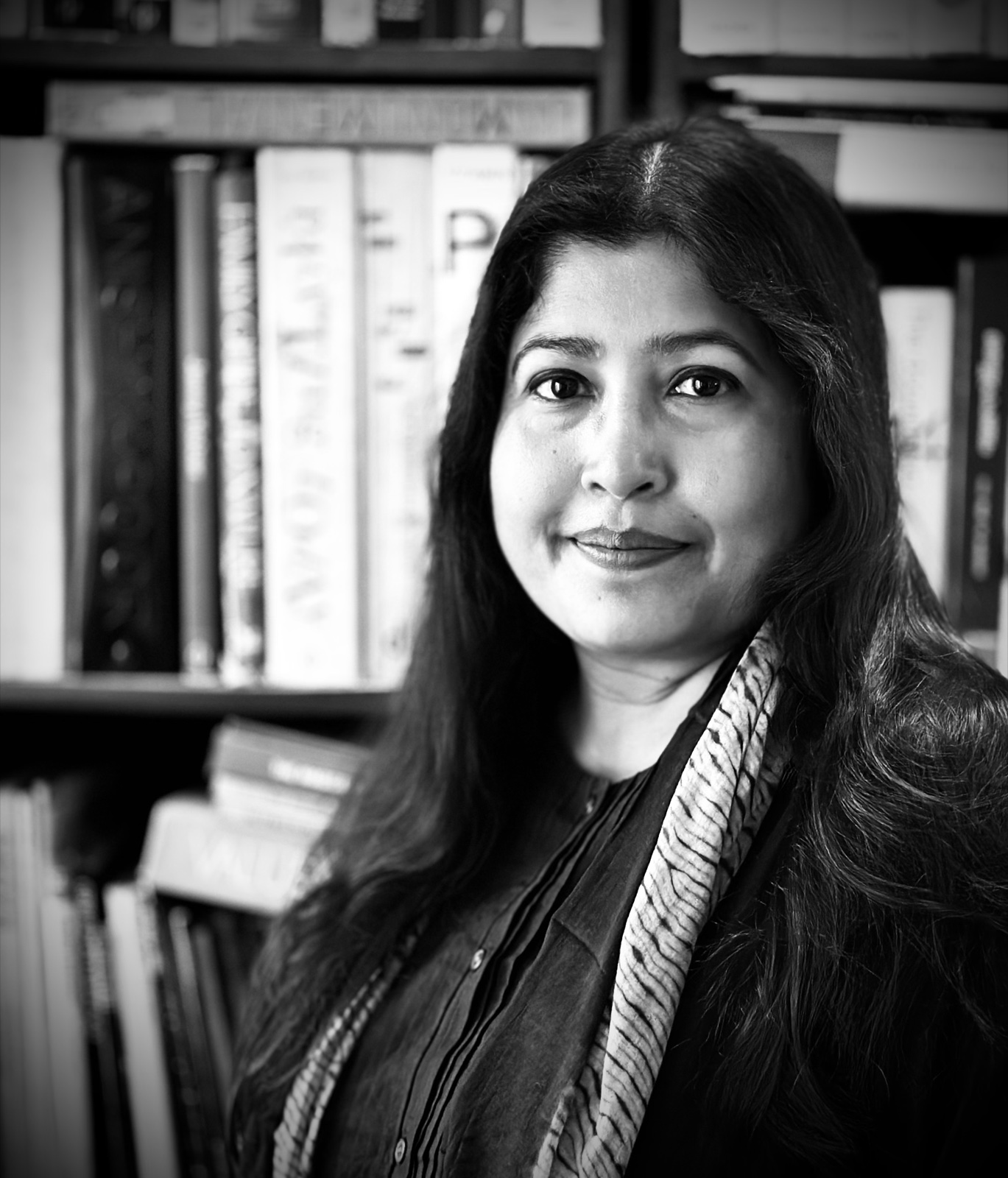
Rupa Paul is a Kolkata-born visual artist working between New Delhi and Kolkata, with an ongoing engagement with Ladakh. Her practice moves across drawing, moving image, photography, performance, artist books, archival practice and site-responsive installation.
Her work examines how memory, knowledge and history are carried through bodies, gestures, domestic spaces, landscapes and material traces — particularly at moments when language, authorship and certainty begin to fail. She approaches archives not as evidence of a stable past, but as unsettled sites of transmission, where traces remain even as the lives, labour and everyday worlds that shaped them recede.
In Paul's practice, drawing extends beyond paper into bodily gesture, erasure, repetition, projection, movement and acts of re-making. Gesture becomes an expanded form of drawing, with the body both an instrument of making and a site through which memory is carried and altered. Across these forms, she returns to questions of inheritance, labour, disappearance, care and continuity: what survives, what becomes illegible, and what is altered simply by being preserved.
Her relationship to Bengal emerges through family histories linked to the clay-making traditions of Kumartuli and Krishnanagar, while her continuing work in Ladakh asks how a place is carried in the body — through weather, everyday gestures and encounters with people, animals and the land.
Her ongoing project, BAPI: What Remains Before Disappearing, includes the Foundation Project titled BAPI: An Archaeology of Design Memory. This Foundation Project is implemented by India Foundation for the Arts (IFA), under the Arts Practice – Explorations Programme, 2026.
Statement
The work begins where evidence becomes unstable.
I often begin with something that has already started to shift: a gesture, an inherited fragment, an image detached from its context, an elder's voice, a domestic space, a landscape carrying histories it does not announce.
I do not begin with a fixed medium. Drawing, moving image, photography, performance, archive and site become provisional ways of staying with a question. Through repetition, tracing, erasure, stitching, duration, projection and re-making, I follow how memory passes between bodies, materials, places and time — and how it changes in the act of being carried.
Memory, for me, is not storage. It is transmission.
Drawing is central to this process, but I understand drawing beyond paper. A gesture can draw. A camera can draw through duration. A thread can draw between bodies. An absence can become a mark. Thinking itself can become drawing.
The intimate therefore rarely remains private. A family archive can open onto histories of labour and design; a body can carry structures it cannot completely name; a landscape can hold ecological and collective memory.
I am drawn to the interval between presence and disappearance — when something remains, yet can no longer remain intact.
Art, for me, is not the illustration of an answer. It is the form a question takes while remaining unresolved.